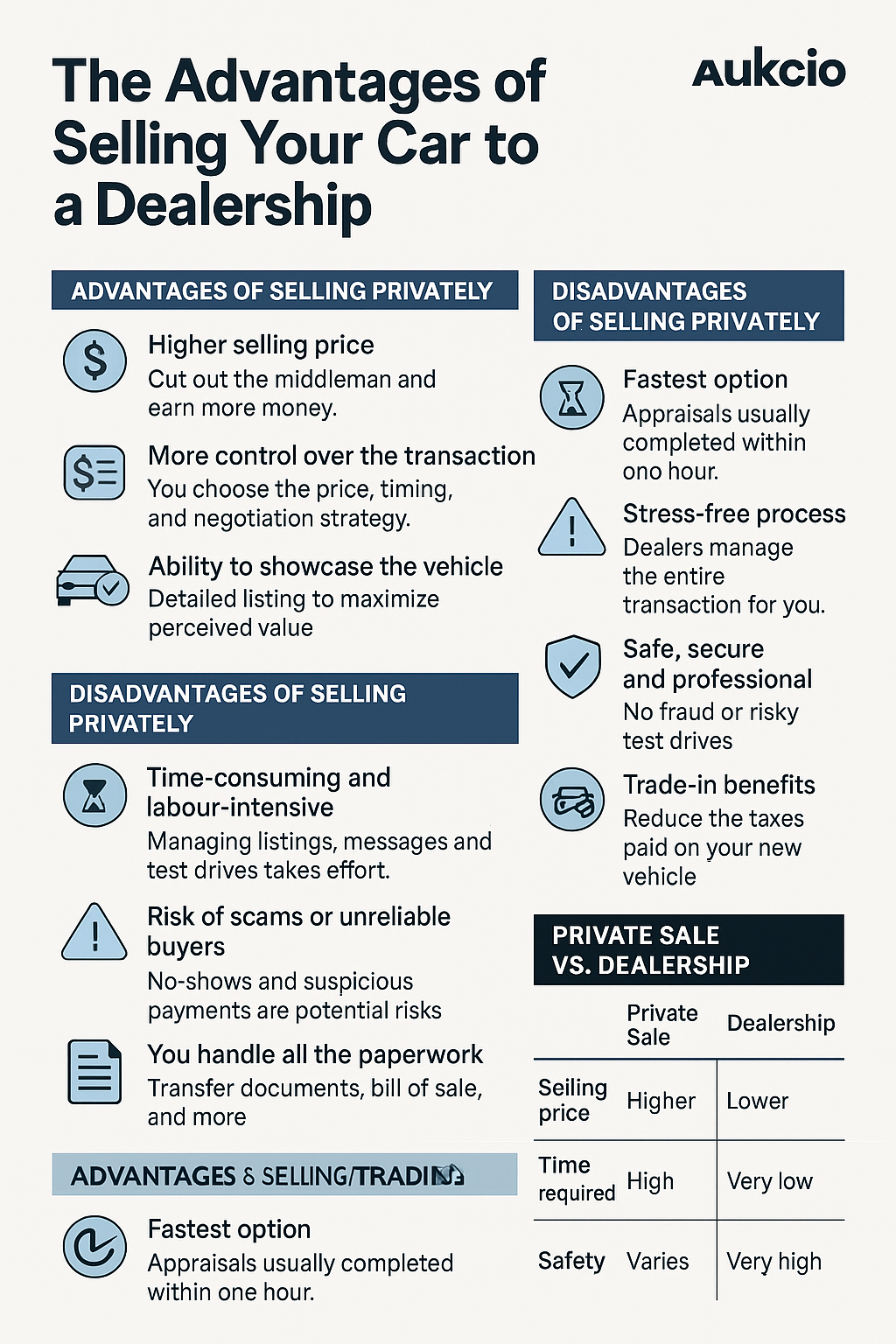
Selling privately usually means earning more money than trading in at a dealership. Dealers must inspect, repair, certify, and resell the vehicle, which reduces the offer they can make. A private sale has no intermediary. Negotiation is direct and transparent.
2. More Control Over the Transaction
You decide:
your asking price
your schedule
which buyers you meet
negotiation strategy
when you finalize the sale
Perfect for people who like to manage the process themselves.
No listings. No strangers. No negotiations with buyers.
2. Stress-Free and Fully Managed Process
Dealerships take care of:
mechanical inspections
repairs or reconditioning
certification
reselling
administration
taxes + paperwork
You simply accept the final offer.
3. Safe, Secure and Professional Transaction
No fraud, no bounced payments, no risky test drives.
4. Trade-In Benefits (Tax Savings)
When buying another vehicle, your trade-in value is deducted from the purchase price, which reduces the taxes you pay. This is one of the biggest financial advantages of dealership transactions.
5. Great Option for Older or High-Mileage Cars
Dealers often accept:
high-kilometre vehicles
cars needing repairs
vehicles with cosmetic damage
models that are hard to resell privately
A private buyer may refuse these vehicles.
The Disadvantages of Selling to a Dealership
1. Lower Price Than a Private Sale
Expect 10–20% less compared to selling privately. This is normal — dealerships must recondition and resell at a profit.
2. Limited Room for Negotiation
Dealers use structured pricing based on:
market demand
historical sales
condition
reconditioning costs
This reduces negotiation flexibility.
Private Sale vs. Dealership: How to Choose the Best Option
Criterion 1 — Your Priority: Money or Convenience?
Want the highest price → private sale.
Want speed and zero hassle → dealership.
Criterion 2 — Your Available Time
Busy schedule → dealership.
Flexible → private sale is realistic.
Criterion 3 — Vehicle Condition
Excellent condition → good candidate for private sale.
Needs repairs → dealership is easier.
Criterion 4 — Your Comfort Level
Don’t like negotiating → dealership.
Comfortable interacting with buyers → private sale.
Comparison Table: Private Sale vs Dealership
| Criterion | Private Sale | Dealership |
|:-------------------:|:-----------------------:|:---------------------------------:|
| Selling price | ⭐ Higher | ⭐ Lower |
| Time required | ⏳ High | ⏱️ Very low |
| Safety | ⚠️ Varies | 🔒 Very high |
| Paperwork | Your responsibility | Fully handled |
| Vehicle preparation | Often needed | Not required |
| Overall convenience | Moderate | Excellent |
| Best option if… | You want maximum profit | You want a quick and easy process |
FAQ – Selling Your Car to a Dealership
1. Do I lose money by selling to a dealership?
You earn less than in a private sale, but the process is faster, safer, and stress-free.
2. How long does a dealership transaction take?
Most deals are completed within 60 minutes.
3. Can I negotiate the trade-in offer?
Yes, but negotiation room is often limited.
4. Do I save taxes when trading in a vehicle?
Yes — taxes are calculated on purchase price minus trade-in value, reducing the total amount paid.
5. Will dealerships take older or damaged cars?
Most do, even if the vehicle needs repairs or has cosmetic issues.